
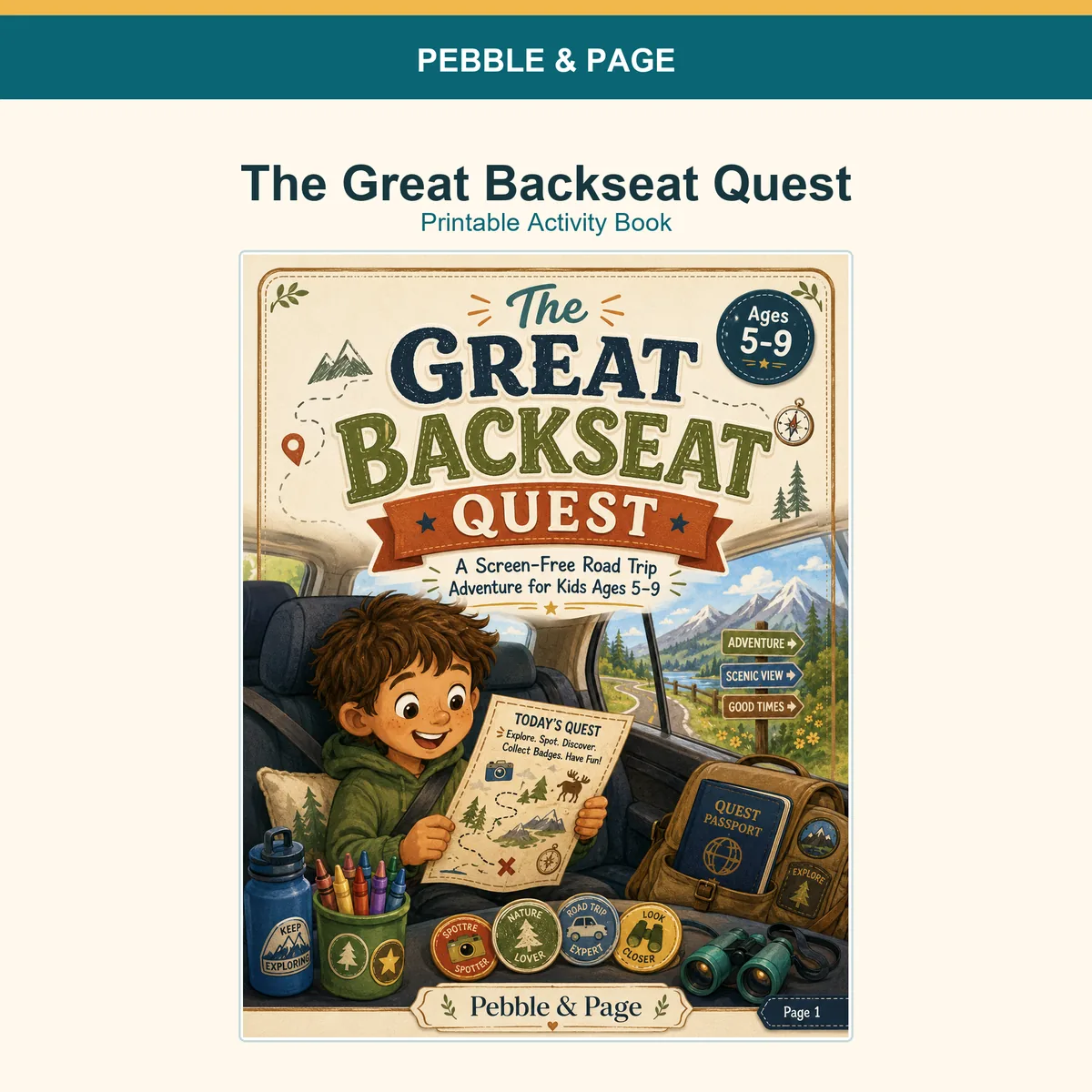
A useful travel bag is small, reachable, and saved in chapters instead of opened all at once.
Choose the container before the contents
Start with a soft-sided tote or handled zip pouch that fits beside the child without blocking a seat belt or becoming a hard loose object. Add one clipboard or firm folder so pages have a stable surface. A pencil pouch should hold every loose tool, making the before-each-stop count quick.
Divide the trip into leaving town, open road, break, and final stretch. Place one or two activities in separate envelopes for each chapter. The bag feels fresh longer when the entire contents do not appear in the first ten minutes.
- Clipboard or firm folder
- Pencils and six crayons
- Reusable stickers
- Four activity envelopes
- Keeper folder for finished pages
Pack invitations, not assignments
Choose a window-spotting sheet, a route doodle, a travel badge page, a conversation card, and blank paper. Include a familiar favorite for the tired part of the trip. A page is an invitation; it does not need to be completed before the next one appears.
Avoid small pieces that disappear under seats, wet art materials, and supplies that need frequent adult help. If scissors or glue are useful later, keep them in the grown-up bag for the stop rather than the moving car.
The landscape is already changing. The activity bag only needs to help children notice it.
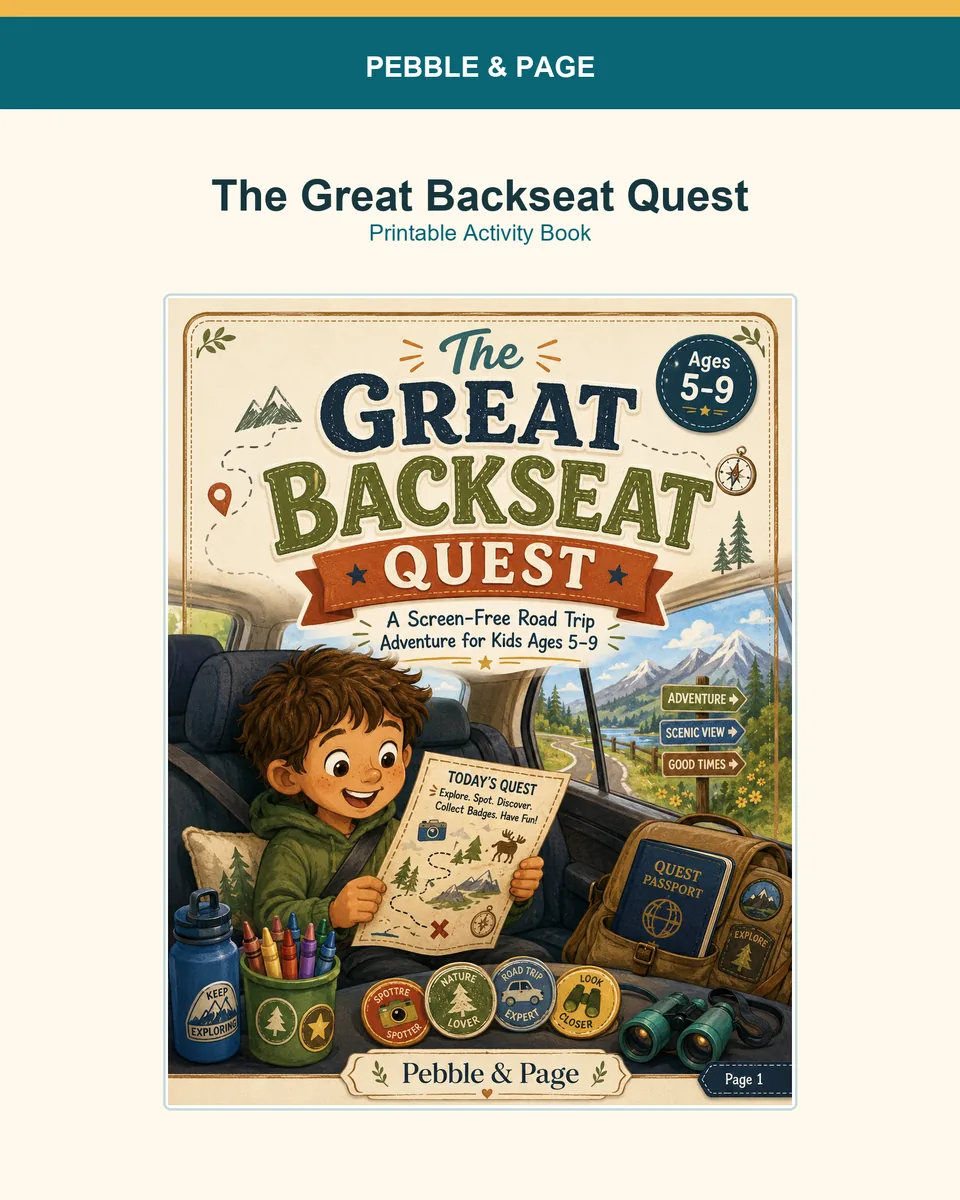
Plan for the bag to rest
Alternate an activity chapter with music, conversation, a snack, or simply looking out the window. Children do not need continuous entertainment. Put completed work in the keeper folder and reset the pencil pouch at each stop.
Before the return trip, remove pages that were not interesting and add only a few new ones. A small bag that has been edited for the actual child is more useful than a perfect-looking kit filled with options nobody wants.
- Count tools at stops
- Offer one chapter at a time
- Keep a blank-page backup
- Let unused pages stay unused
Try it today
A five-step plan you can actually use.
- Choose one safe, soft-sided bag.
- Add a clipboard and countable pencil pouch.
- Make four labeled activity envelopes.
- Pack one familiar favorite and one new idea.
- Place the bag where an adult can reach it safely.
Read next