
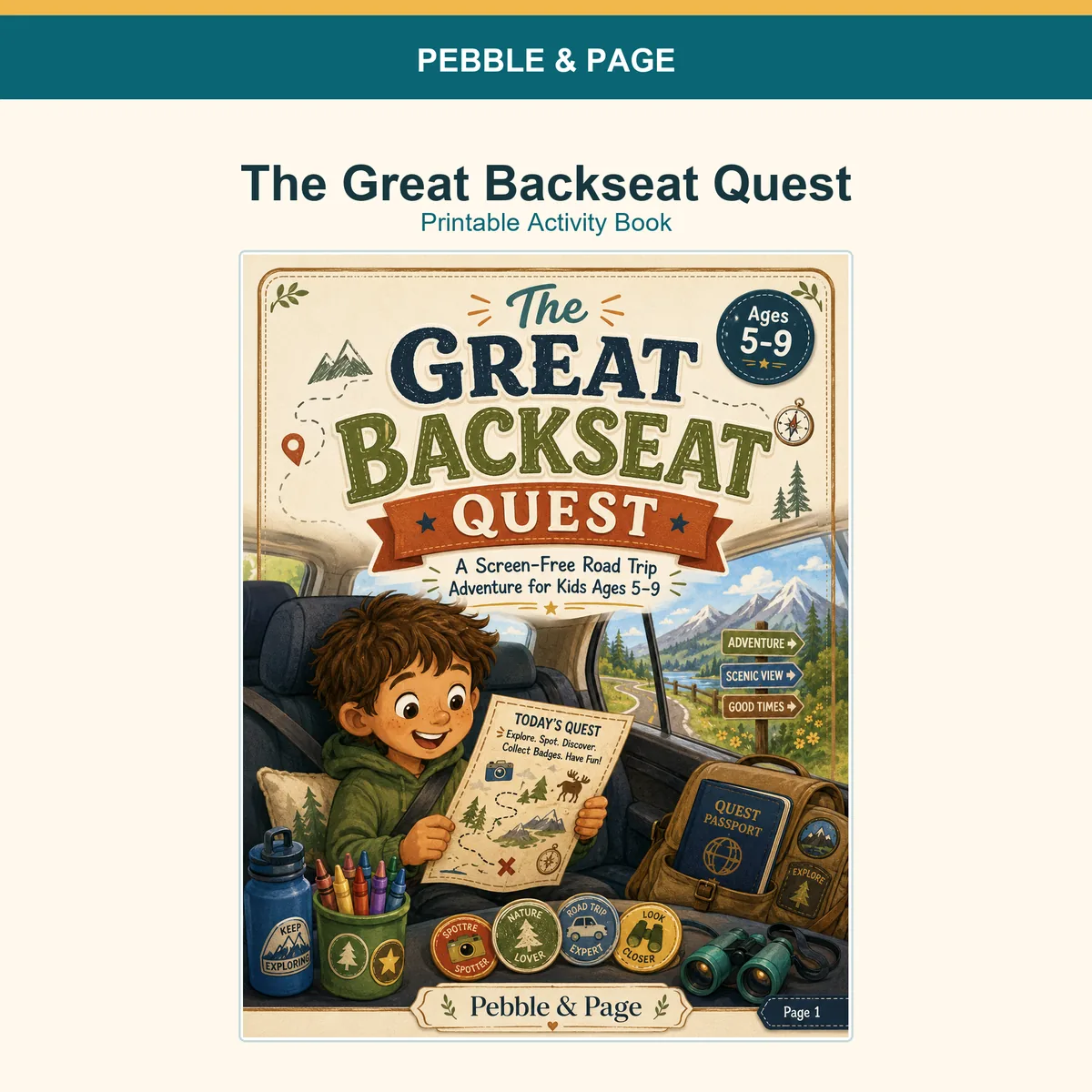
The trip can have chapters, discoveries, and a story even when the route is ordinary.
Give the journey a story frame
Choose a quest name based on the destination, weather, or family joke. Draw a simple route with three chapter markers: departure, middle discovery, and final approach. Children can add imagined landmarks without changing the real navigation plan.
Create roles that are safe and optional: cloud spotter, bridge counter, snack announcer, or story keeper. Rotate roles at stops so no one must perform for the entire drive.
- Quest name
- Three route chapters
- Optional observer roles
- One shared travel symbol
Collect discoveries without collecting objects
Use checklists, sketches, and words to gather blue signs, funny place names, animal shapes in clouds, new landscape colors, or imagined creatures. A child can mark I found it manually; no camera, microphone, or location tracking is needed.
At a stop, invite one page that changes the pace: draw the last view from memory, add a badge to the route, or invent what might live beyond the next hill. Then let the activity rest.
The child does not need to complete the page for the journey to count as an adventure.
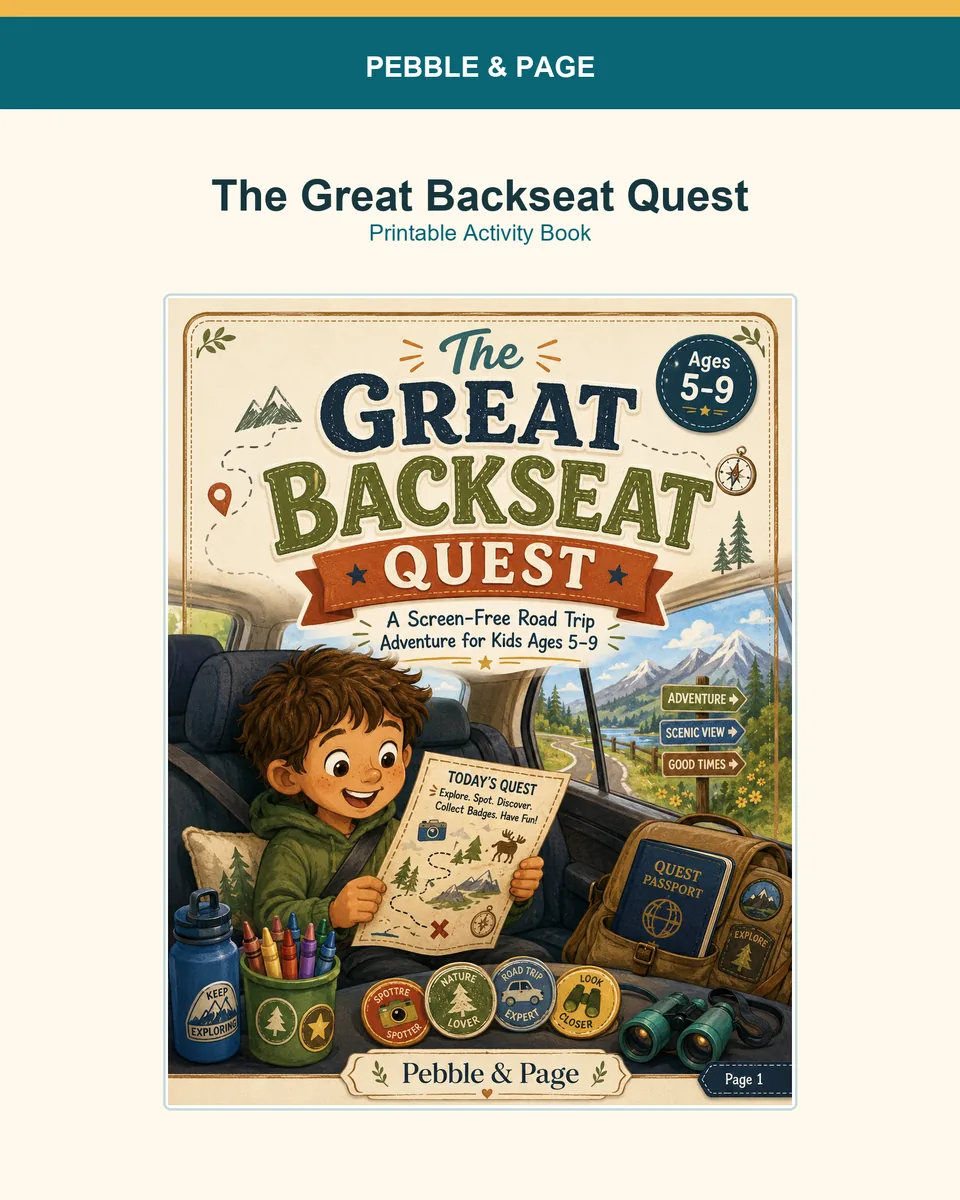
Make the final approach special
Save one simple ritual for the last stretch: play a chosen song, open a final clue envelope, or name three things the family noticed. This gives the long ride an ending rather than letting everyone simply run out of patience.
On the return trip, reuse the route in reverse and look for changed details. Familiar activities can feel different because the view, light, and family energy have changed.
- Final clue
- Arrival song
- Three discoveries
- Reverse-route challenge
Try it today
A five-step plan you can actually use.
- Name the trip quest.
- Mark three chapters on a paper route.
- Choose two safe observer roles.
- Pack one final-stretch envelope.
- Plan a no-pressure arrival ritual.
Read next