Participation can be small, concrete, and free from pressure about what anyone eats.
Offer choices the adult can support
Instead of what do you want for dinner, offer two acceptable bases, sides, or themes. A child might choose tacos or bowls, peas or carrots, or breakfast night this week or next. The adult keeps responsibility for budget, timing, allergies, and household needs.
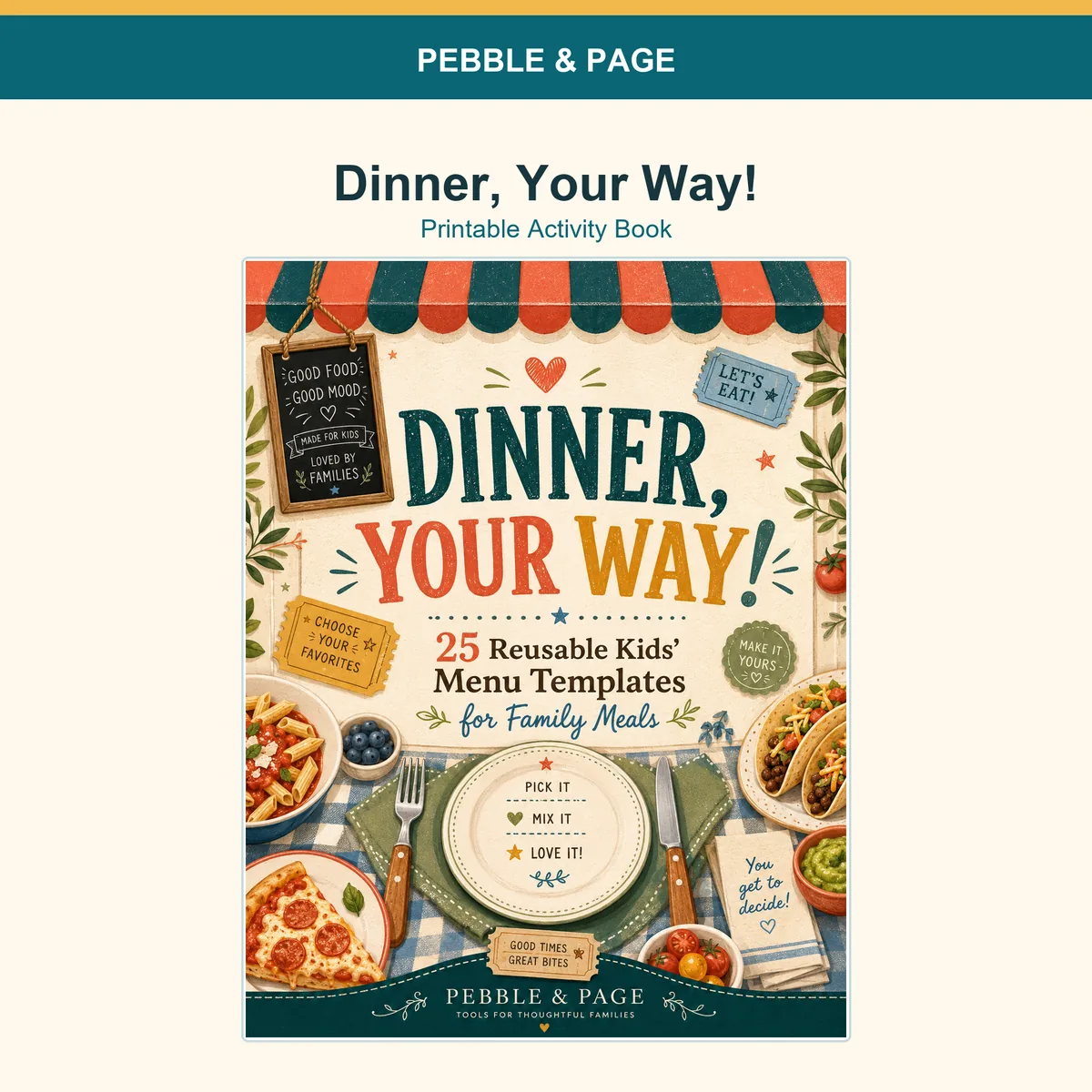
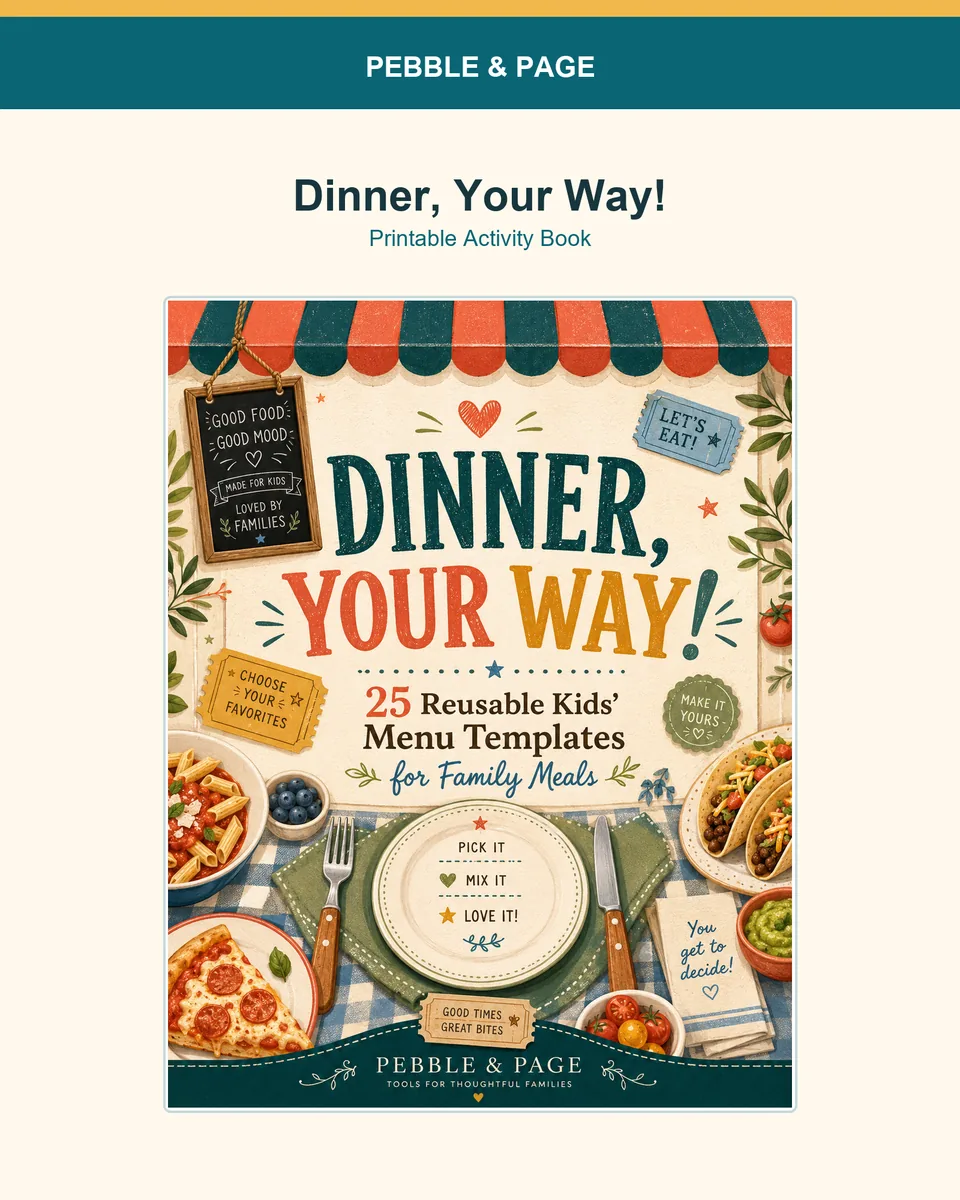
Use pictures, ingredient cards, or a simple menu sheet for children who prefer pointing or drawing. Their participation is real even when the choice is small.
- Choose between two meal shapes
- Pick one family side
- Select a theme night
- Draw a menu sign
Give a job with a clear finish
Useful jobs include washing produce with supervision, placing napkins, choosing serving utensils, stirring an appropriate mixture, or drawing place cards. Explain where the task ends so helping does not become a vague demand.
Avoid tying praise to how much the child later eats. Planning and tasting are separate experiences. The family can appreciate the work without making a bite the price of participation.
Helping with dinner is connection and practical participation—not a promise that a child will eat a particular food.
Use creativity at the table
Build-your-own meals invite visual planning. Children can design a virtual taco, pizza, bowl, or snack plate before the meal, then notice which parts are available in real life. The pretend version does not have to match the plate.
End by recording one thing that made the setup easier for next time. Keep useful jobs and choices; release those that created more work than connection.
- Virtual meal builder
- Family menu name
- Table decoration
- One idea for next time
Try it today
A five-step plan you can actually use.
- Offer one bounded dinner choice.
- Choose one child job with a clear finish.
- Keep allergy and safety decisions adult-owned.
- Thank participation without food pressure.
- Save one idea that worked.
Read next