Small ownership without putting dinner on a child’s shoulders
Offer choices inside a safe frame
Choice feels powerful when both options are truly available. Ask whether tonight’s vegetable should be on the plate or in a shared bowl, whether the napkins should be folded or rolled, or which of two meals belongs on Friday.
Avoid asking a question when only one answer works. A clear statement is kinder than a pretend choice. The grown-up still carries the planning; the child gets a meaningful corner of the decision.
Choose one job that ends
Jobs are easier when children can see when they are done. Place five forks, fill three water cups, choose a table question, or draw the dinner sign. Broad instructions such as help with dinner can feel endless.
- Table artist: make a tiny menu or place card.
- Color captain: choose two colors for napkins or cups.
- Question keeper: pick one conversation card.
- Welcome helper: decide where the family centerpiece belongs.
Make curiosity different from pressure
A playful meal page can invite children to notice colors, textures, shapes, or family favorites without requiring a certain bite. They can draw a dream plate, invent a restaurant name, or rate the silliest vegetable shape.
Keep the activity about imagination and participation rather than monitoring what a child eats. Mealtime is already full of sensory information and family expectations. The printable should add play, not another score.
Participation can mean setting a spoon, telling a story, or choosing a color—not finishing a plate.
Repeat the ritual, change the details
Use the same structure once a week: two choices, one job, one playful prompt. Familiarity makes it easy, while the changing details keep it interesting.
Save favorite menus and table drawings. A month of ordinary dinners can become a funny family restaurant guide made by the people who actually ate there.
Try it today
A five-step plan you can actually use.
- Choose two dinner decisions that both work for you.
- Offer one specific table job with a clear finish.
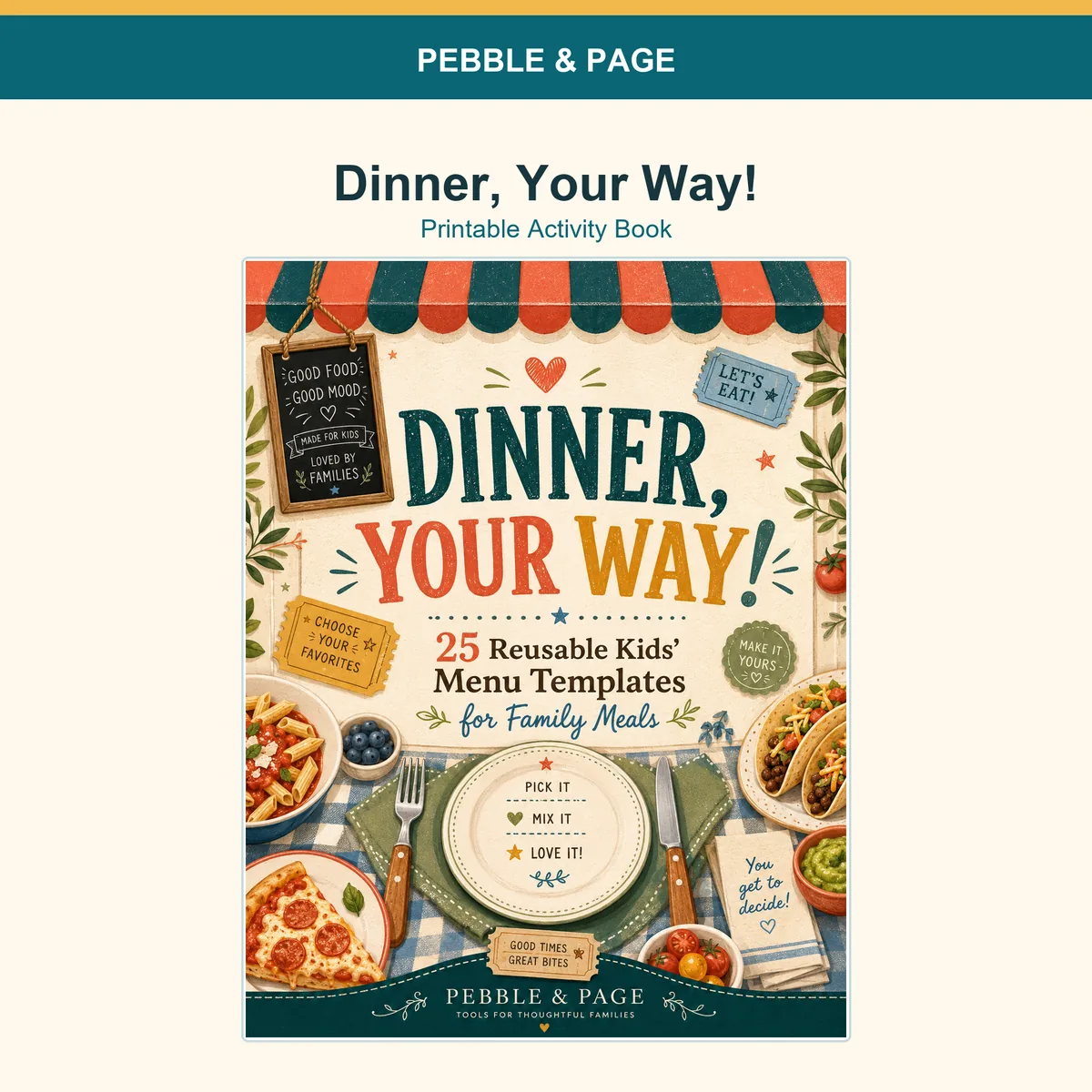
- Place a simple menu-design or dinner-doodle page nearby.
- Use one playful family question during the meal.
- Save the page only if the child wants to keep it.
Read next